
Westcoast Wave Newsletter - July 2026
Welcome to the July 2026 Newsletter!
We’ve Gone Viral!
We’re thrilled to share that the latest episode of our podcast, 'BC’s Path to Universal Child Care', featuring Nicky Byres, has truly resonated with educators across the field —and has been featured in ExchangeEveryDay, a leading U.S. early childhood publication, in an article called ‘A Glimpse into Universal Child Care in Canada’. What an incredible reminder of the power of shared dialogue and collective vision! Listen to past podcast episodes on our website, and wherever you listen.
If you haven’t yet tuned in, we invite you to dive deeper into Nicky’s work with Reimagining Our Work. Her reflections open up meaningful possibilities for how we engage with children, families, and one another—as educators, leaders, and advocates. What has meant the most to us is the response from this community. We’re proud to share a few reflections from listeners:
“Taking the burden of child care fees off families ripples out in so many positive ways… I saw that impact firsthand growing up. Thank you for continuing to champion this work.”
“Your commitment to publicly funded child care, grounded in pedagogy, really came through. I’m with you—we are not going to take any less than what we need.”
“It was deeply inspiring… I found myself returning to parts of the conversation again. The passion behind ‘we are not taking any less than what we need’ stayed with me.”
“I treated myself to the podcast interview you recently sent. How absolutely terrific. How little I've really known about your professional trajectory, your mum's footprints, the overall ECE Canadian/BC system and development of your organization. I especially appreciated the nuances you shared around well-being of families supported regardless of higher income, something our U.S. cities with progressive governments are trying to wrestle through in experiments with universal child care. Then, with your very own eyes, you've also witnessed what happens when parents choose (or out of necessity to juggle) lower costs over attention to the best program considerations "worthy of their child". Your emphasis on educators not yet receiving their worthy compensation yet returning to work they love because it provides child care benefits for their own family seems like a conundrum to explore further for organizations and government policies & budgets.
So much more, Nicky, but for now, once again a deep bow of gratitude”.
These words speak to the heart of what we believe—that building systems worthy of children, families, and educators requires courage, clarity, and collective commitment.
Our podcast will take a break for the summer and will return in September.
Thank you for listening, reflecting, and standing alongside us in this work.
The WCCRC Team

Westcoast Training
Last month we introduced you to the EYPD Portal, but do you know about The Hub for BC Early Years Professionals?
This website is a collaboration between us at Westcoast CCRC, Early Childhood Educators of BC (ECEBC), BC Aboriginal Child Care Society (BCACCS), and the Early Childhood Pedagogy Network (ECPN) to provide free or low-cost courses for professional development. You can also find our Administration and Management for Child Care Knowledge Base here for free. Just sign in or create a free Hub account, and don’t forget to share it with your colleagues and friends.
This month, we have a few new facilitators providing new workshops. If Common Practice Gaps in Child Care: Strengthening Practice by Zahra Rahbari or Your Brain on the Job by Gary Anaka sound interesting to you, register today!
Looking for a way to stay engaged with your peers and learn new skills? Check out the professional development courses happening at Westcoast!
Our courses and workshops support the implementation of the BC Early Learning Framework, Schedule G of the BC Child Care Licensing Regulation and the Early Childhood Educators of BC Code of Ethics.
Create a free WCCRC account to register for our courses, workshops, access certificates and view your transaction receipts. Sign in or create a free WCCRC account to get started.
To view previous and upcoming workshops, visit our calendar page. Before registering, check out our Workshop FAQ's, Policies and Online Workshop Basics.
View our upcoming workshops!

Westcoast Family Centres offers engaging workshops and groups that provide resources for parents and families in the Lower Mainland. Our programs range from parent education to parent support groups to activity programs for children. Our evidence-based programs and workshops are focused on strengthening your connection with your child and family, and foster connections with other families in your community.
Learn more about our upcoming groups offered this Summer on our events calendar, from Kindergarten Preparedness Group, Evening Family Resource Program, and other drop-in programs such as Baby & Me, Power of Play, Little Explorers and more!
View our upcoming workshops!
WELL News
Summer Street Socials
There are a variety of street festivals with free (or low cost) entry this summer, to be able to experience different foods and cultures, and enjoy time together outside. A couple of examples are Canada Together, will be at Canada Place, for Canada Day; the Khatsahlano Street Party, at West 4th Avenue in Kitsilano, on July 11th, and Carnaval Del Sol, in Jonathan Rogers Park, on the weekend of July 10-12. Visit Plan Your Summer at These Vancouver Festivals for a comprehensive list.
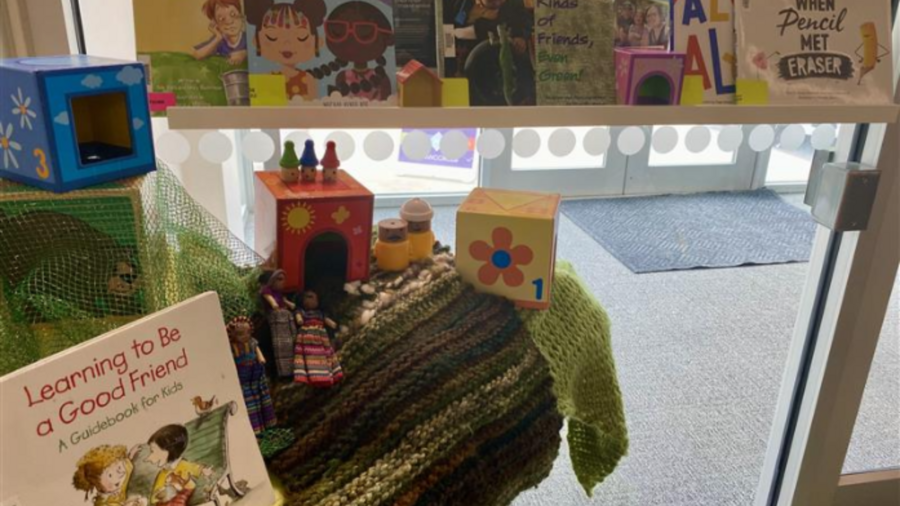
Speaking of socializing, the WELL has many books about the ups and downs of friendship, as well as resources to practice those emerging social skills!
Learn more about our library

For Parents & Guardians
Sun Safety - Information for Parents from Canada's Pediatricians Caring for Kids
Protecting children from getting too much sun is important, whether they are playing outside or are with you on an errand. The hot summer sun can be dangerous for children. A child can get sunburned easily, even on cloudy days. Bad sunburns and too much time spent in the sun without skin protection have been linked to a higher risk of skin cancer later in life.
During the summer months, children can easily lose body fluid and become dehydrated. Children’s skin can also be burned by touching hot surfaces, such as pavement, hot sand, metal slides, or car doors.
How can I keep my child safe from the sun?
Avoid being in the sun for long periods at the start of the season. Gradually increase the amount of time you spend outdoors with your child over a period of several days. When possible, stay indoors or in the shade during the hottest time of the day, 10 a.m. to 2 p.m.
To prevent sunburn:
Always protect babies from the sun:
Limit sun exposure, especially during peak hours.
Cover your baby in loose clothing and make sure they are wearing a hat.
Use a stroller sunshade to cover your baby.
Properly apply a small amount of sunscreen with SPF 30 (sun protection factor) on exposed areas. Note that sunscreen is not recommended for babies under 6 months old, because they can rub it in their eyes and mouth.
Make sure your child’s favourite play areas have a shady spot or bring along a sun umbrella.
Your child should wear a sun hat with a wide brim and back flap to protect the back of the neck, sunglasses with 100% UV protection (“broad spectrum”) and loose cotton clothing to protect skin from the sun’s rays. Only UV-rated clothing protects the skin under it, completely from the sun. Sunscreen should be applied to the entire body if regular clothing is worn.
At least 30 minutes before heading outside, apply sunscreen with an SPF of at least 30 on all areas of your child’s skin that will be exposed to the sun. Use a lip balm with SPF 15 as well.
Remember to put sunblock on ears, nose, back of neck and legs, and tops of feet.
Reapply sunscreen every 2 to 3 hours, and after swimming or vigorous play.
To prevent heat illness or dehydration:
Encourage your child to drink plenty of fluids, especially water. Children don’t necessarily feel thirsty while at play.
Be alert for signs that your child is experiencing heat illness and needs to go inside. These include thirst, fatigue, leg or stomach cramps, and cool, moist skin, which can be a sign of heat exhaustion. Bring your child inside or into a cool, shady area, and offer frequent small sips of water. Removing extra clothing and fanning can help your child cool down slowly.
Most importantly, lead by example and remember to protect yourself from the sun as well.
Learn more

Immunization Clinics – Vancouver Coastal Health
Get ready for Kindergarten!
Starting at age 4 (kindergarten entry), it’s recommended that your child get 2 vaccines:
Tdap- IPV vaccine: Protects against tetanus, diphtheria, pertussis (whooping cough), and polio
MMRV vaccine: Protects against measles, mumps, rubella, varicella (chickenpox)
You can get immunizations through your local public health unit, family doctor, nurse practitioner, or pharmacist.
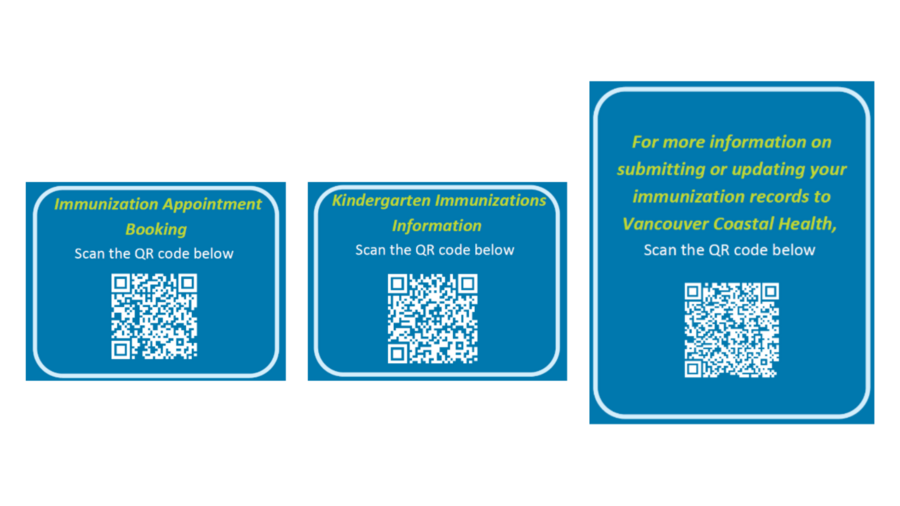
Find an immunization clinic here or scan the QR codes

Government News
Subscribe to the ChildCareBC bulletin to be automatically notified every time it's updated.
Subscribe here
Public engagement now open to gather input on the future of child care in B.C.
Since the launch of ChildCareBC in 2018, families have seen substantially lower fees, more spaces, and a bigger workforce in the sector with the newest social program in B.C. in a generation. The Province is continuing to build on this progress and is seeking input to guide the future of child care in B.C.
The provincial government has launched a survey to hear directly from families, early childhood educators and child care operators about their experiences.
This survey is voluntary and is separate from the ongoing mandatory Provider Profile Survey.
The survey can be found at gov.bc.ca/childcaresurvey. Please feel free to share the survey poster with your networks.
Reminder: Emergency Management Resource Package and Key Contacts 2026
To support emergency preparedness and planning across the education and child care sectors, the Ministry of Education and Child Care is sharing an updated emergency management resource package. These resources support preparedness, mitigation, response and recovery planning.
The K-12 Education and Child Care: Emergency Management Key Contacts (PDF) lists current contacts at the ministry and other educational partners to support emergency response coordination and information sharing
The K-12 Education and Child Care: Emergency Management Resource Package (PDF) 2026 includes key resources to help schools and child care facilities plan for, respond to, and recover from incidents/emergencies such as wildfires, heat events, floods or other risks
Program applications now supported within the new Post-Secondary Program Portal
In December 2025, the Province launched the Early Childhood Educator (ECE) Post-Secondary Programs (PSP) Portal, a new digital platform designed for educational institutions.
The PSP Portal expands the suite of digital ECE Registry services, streamlining program information management and communication for educational institutions that offer early childhood education programs recognized by the ECE Registry.
The Province is now introducing the next phase of the PSP Portal, which will enable these educational institutions to create or update ECE programs more efficiently. This includes the ability for educational institutions to:
Submit applications for new or changed programs
Apply for new delivery methods of recognized programs
Apply for satellite programs
Manage campuses and satellite locations
The new functionality added to the PSP Portal has been tested by educational institution program representatives to ensure it meets their needs and is simple to use.
Child care providers are encouraged to review and share this information to help strengthen emergency readiness.
Questions may be directed to the ministry’s Expect Respect and a Safe Education (erase) team at erase@gov.bc.ca.